Columbus Garage Door ExpertsBulletin 1 of 3Oshawa, Ontario
Extension Spring Replacement: what to note first
It is the first hard frost of the year and the door on the old detached garage has stopped halfway, squealing at one pulley.
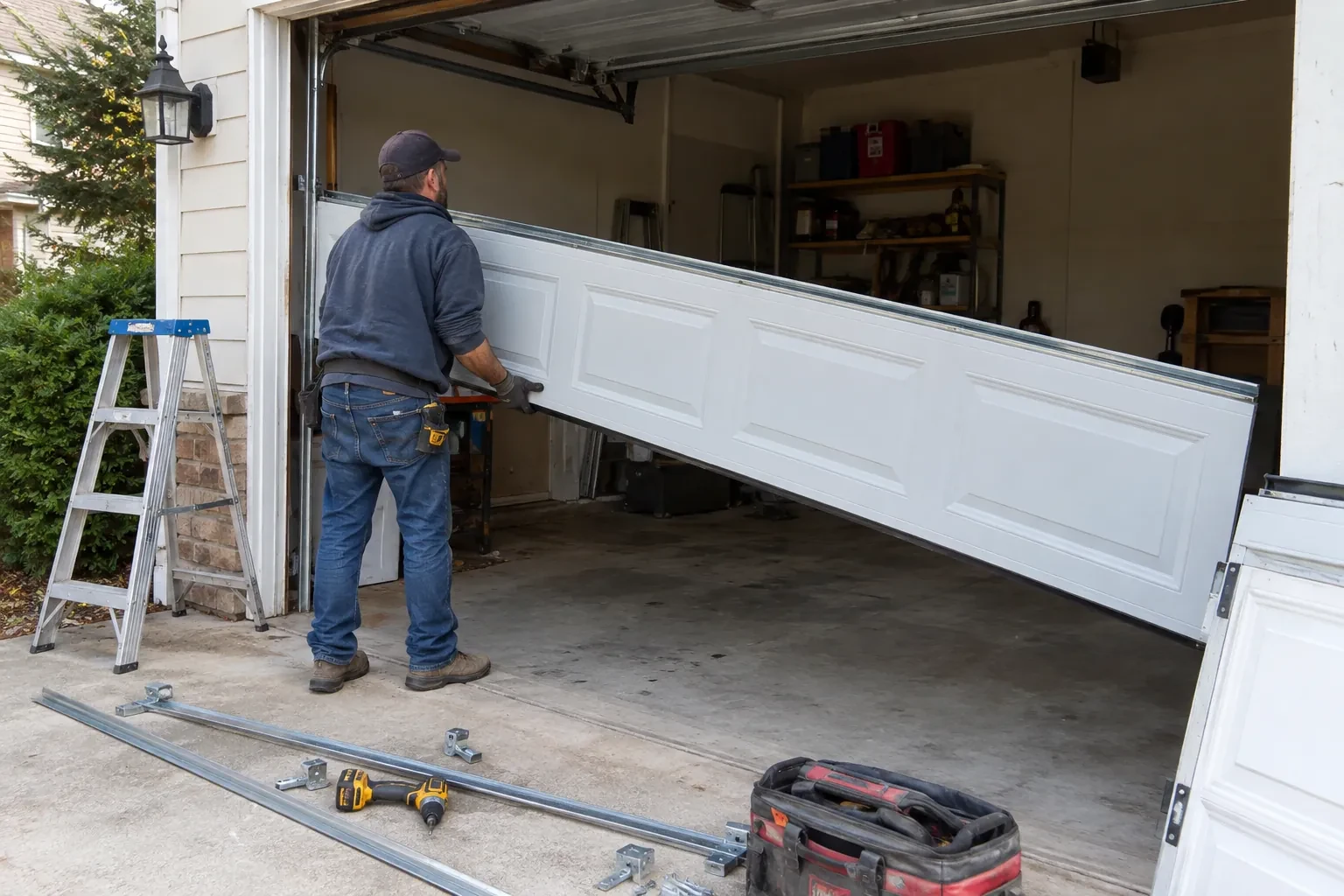
It is the first hard frost of the year and the door on the old detached garage has stopped halfway, squealing at one pulley. The springs are the ones that came with the door decades ago, orange with rust where they hang near the back wall.
Worth answering before the call
Is the door closed, fully open, or stuck partway? Does one corner of the door hang lower than the other? Does the opener still move the door, and does it sound strained?
What is the difference between extension springs and torsion springs?
They balance the door in different places. Extension springs are the two long coils that run beside the horizontal tracks and stretch as the door closes; they work through pulleys and cables. A torsion spring is wound on a shaft above the door opening and turns drums that wind the cables. The parts, the way tension is set and the service itself are different, so it helps to say which you have when you call.
Why does the opener get adjusted after new springs?
Because the door is now much lighter for the opener to move. Over the years, as the old springs weakened, the opener's force setting may have been turned up to keep the door going, and its travel limits were set against a door that sat differently on the floor. Left alone, that extra force would push the newly balanced door too hard. Resetting force and travel, then repeating the reversal tests, matches the opener to the door it now has.