Sound familiar?Oshawa
- The call
- Dry leaves keep appearing in the same corner inside the garage, and this fall there were mouse droppings along the wall beside the door. When you look, the corner where the top and side strips meet is wide open.
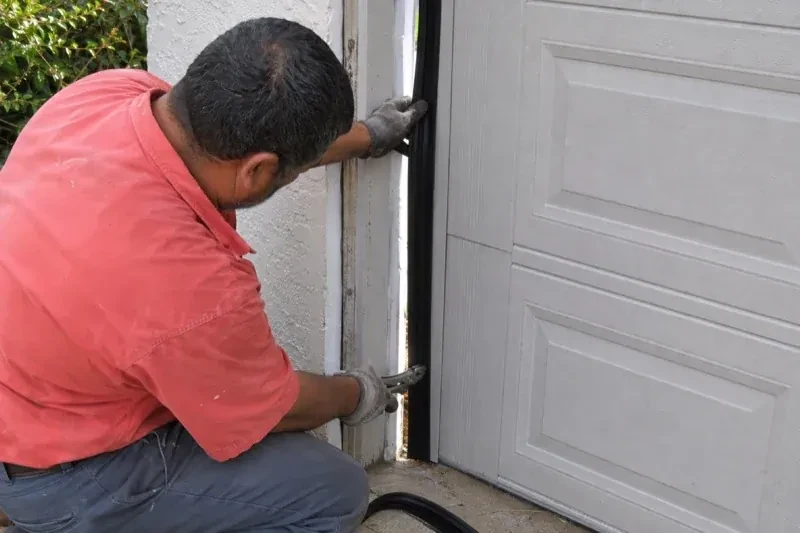
Every time the door closes there is a rubbing squeal along one side, and the flexible fin has folded under itself and torn. Someone painted the trim last summer and painted the seal with it; now it is stiff as a board.
Perimeter seal comes in two common forms, and the visit begins by deciding which suits your opening. The simpler is a flexible vinyl fin nailed to the face of the existing wood stop, which works well where the stop is sound. The other is a one-piece vinyl stop moulding with the fin built in, which replaces the wood stop altogether and suits jambs that are weathered or where the old stop is cracked and paint-heavy. Commercial doors sometimes carry an aluminum retainer with a replaceable rubber insert. Each is cut to your header and sides on site and set against the closed door.
Sound familiar?Oshawa
Garage Door Perimeter Weatherstrip · Oshawa
Scene 1
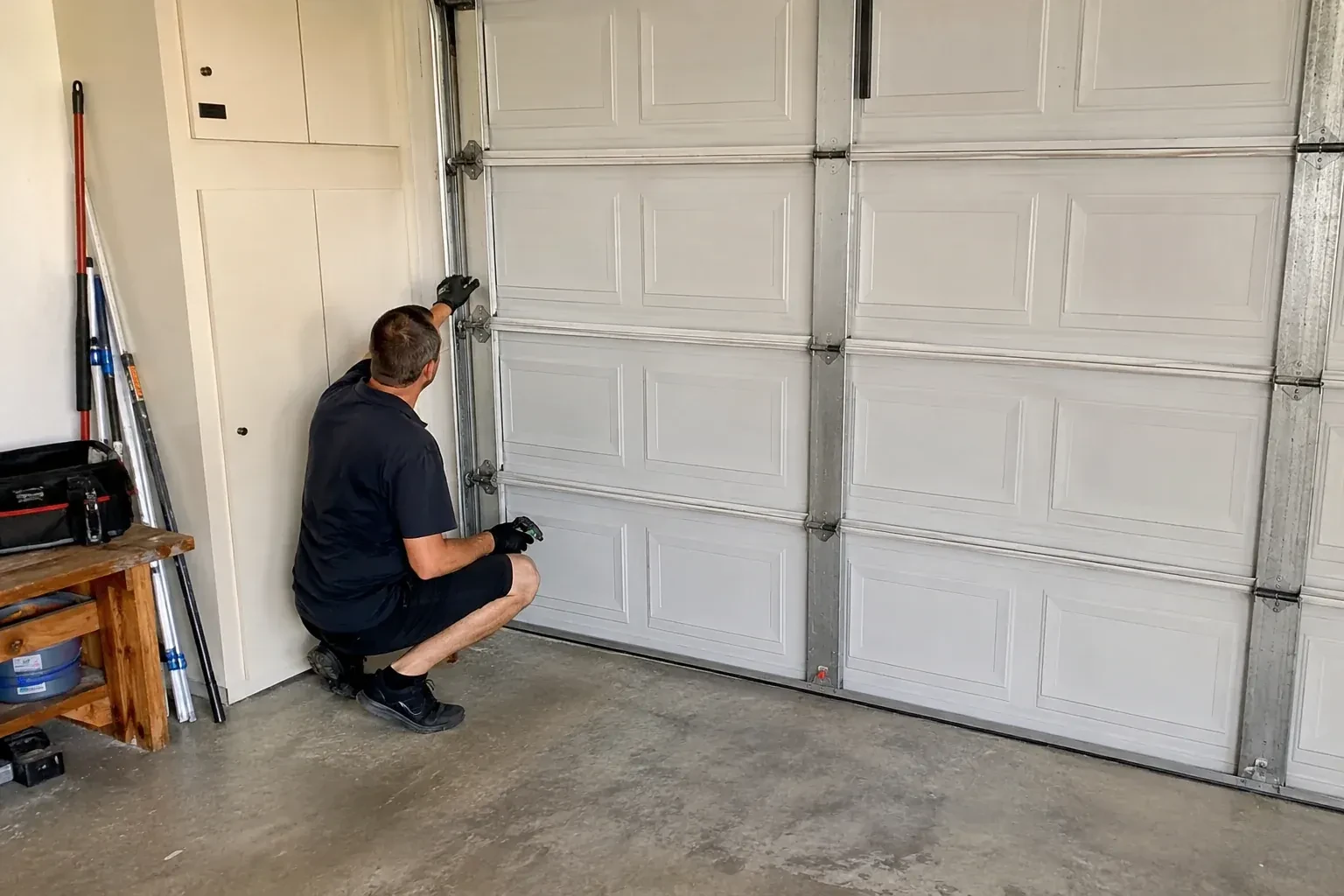
The first check needs no tools. The door is closed, the garage lights go off, and the technician stands inside looking along each side and across the header for lines of daylight. A bright, even line means the fin has shrunk back or hardened; a wedge that widens toward the top or bottom points to the door sitting out of square; a gap only at a corner means the pieces were never overlapped. On a windy day a hand or a smoke pencil along the edge finds drafts that daylight misses. The pattern of the gaps is what tells the technician whether the seal alone is the answer or whether the door needs a small adjustment first.
Scene 2
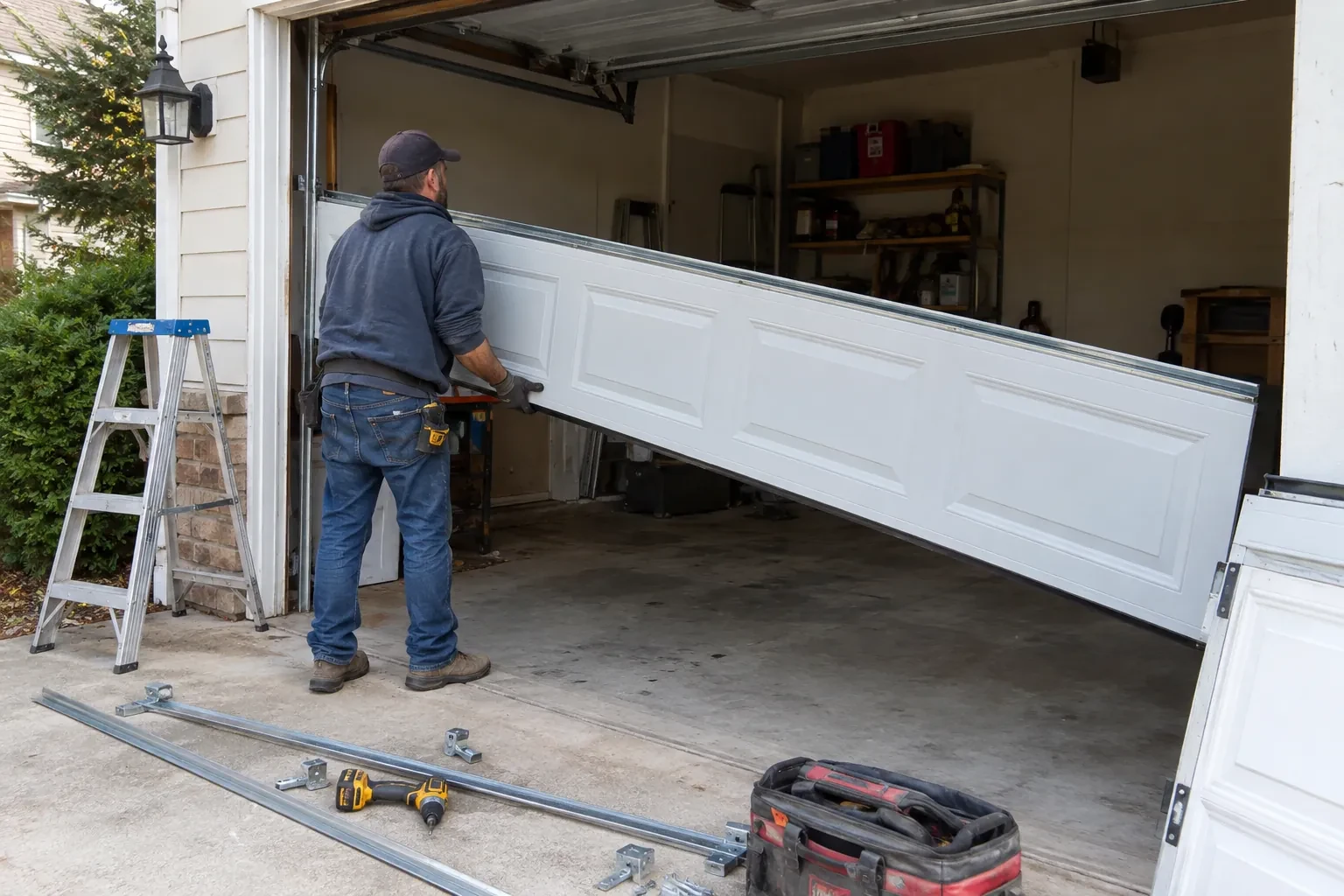
Each side length is cut to run from tight under the header piece down to the floor, with a little spare to trim in place. It is set with the same light contact as the header and fastened top to bottom. At the top corner, the side fin tucks under the header fin so they overlap, leaving no square hole for drafts or mice. At the floor the side is trimmed to meet the bottom seal on the door, so the seal is continuous around three sides and hands off to the fourth. Both sides are done the same way, checking the door edge gap as they go.
Scene 3
The seal was set against the door as it sits today. If the door is later adjusted, has its springs or rollers replaced, or is swapped for a new one, the contact can change: a door that now sits a few millimetres further out presses the fin harder, and one that sits further in leaves a gap. After any such work, do the daylight test again and ask the technician doing that job to check the perimeter seal while they are there. Re-setting a length is a small task and keeps the two parts of the system working together.
What shapes the quoteColumbus Garage Door Experts
FeesSame any hour
Yes, and the rot is handled first. The soft wood at the base of the jamb is cut back to sound material and a new piece of lumber or PVC trim is spliced in, fixed and primed, so the fasteners for the new stop bite into something solid. This is one of the most common additions to a perimeter seal job here, because slush and salt sit against the jamb base all winter.
Four times a year, check for daylight from inside with the lights off and press the fin to feel that it is still soft. Wipe the seal with a damp cloth to clear grit and salt, keep paint off the fin, apply a silicone wipe before winter, and keep slush and bins away from the bottom of the jambs. Press any lifted corner back and call if a length has come loose.
Most residential seals are flexible vinyl or a rubber compound formed into a fin that bends against the door. They come either as a flexible strip that is nailed to a wood stop or moulded onto a rigid vinyl stop as one piece. Commercial doors sometimes use an aluminum retainer holding a replaceable rubber insert, or a brush seal. Manufacturers make them to flex thousands of times as the door operates.
DurhamOntario
Garage Door Perimeter Weatherstrip · Columbus
Every square is one home in a hundred.
On-site assessment
Every time the door closes there is a rubbing squeal along one side, and the flexible fin has folded under itself and torn.
(289) 512-0639, open 24/7.
On-site assessment preferred · (289) 512-0639, open 24/7