Sound familiar?Columbus
- The call
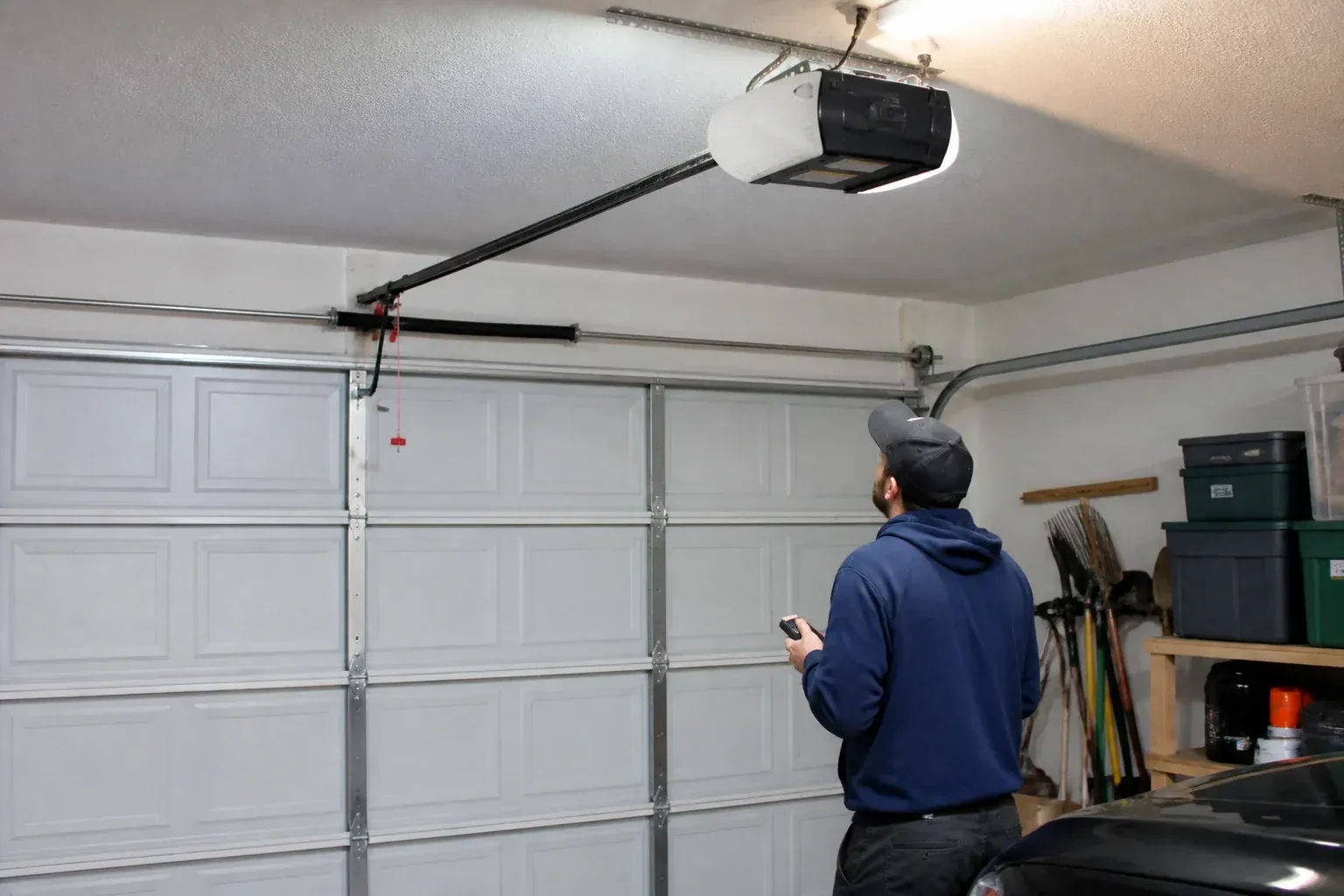
- Press the remote and the motor runs its full cycle, lights on, the usual whir, but the door does not move a centimetre. Up at the trolley, the belt is hanging loose where a small plastic clip used to hold it.
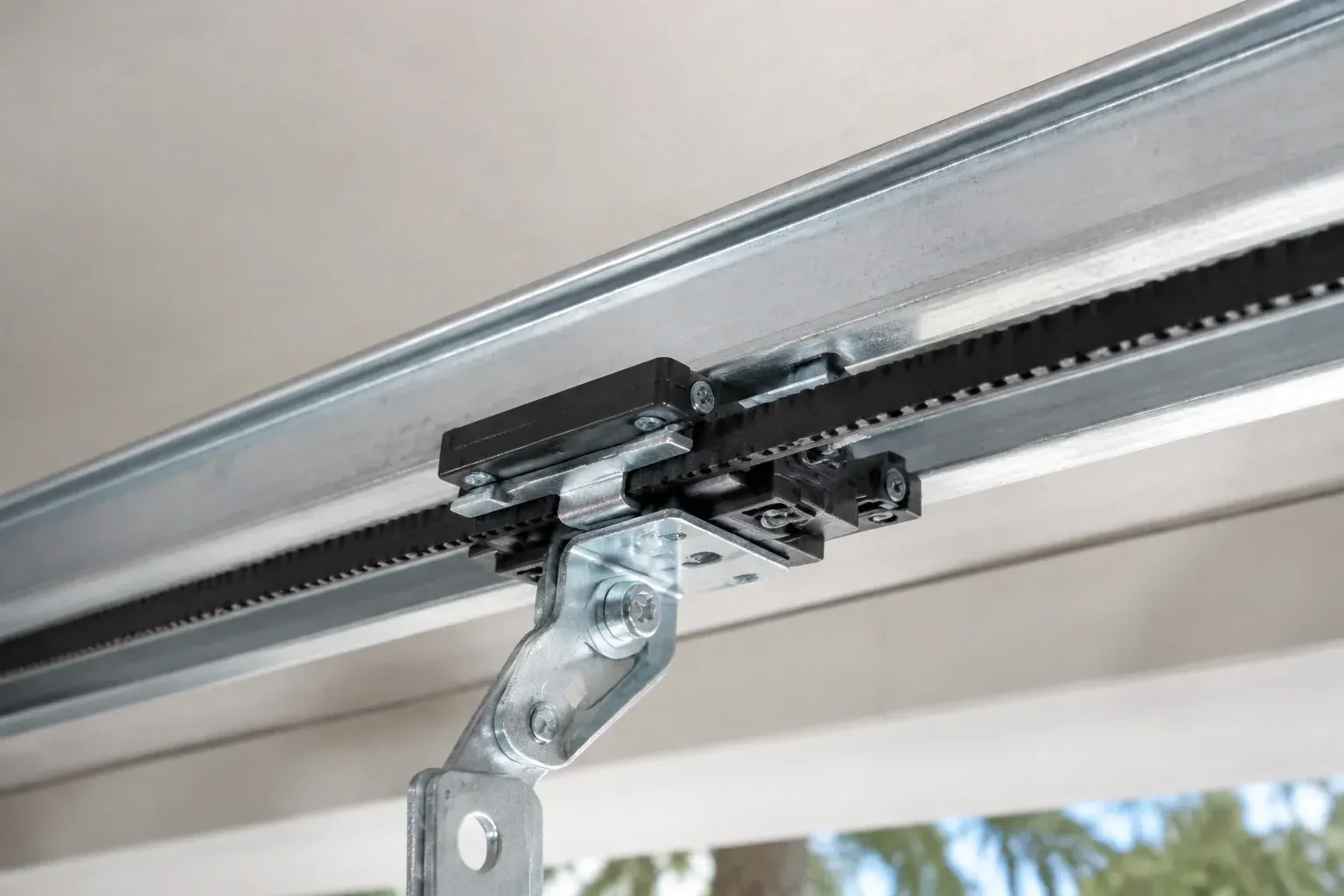
Someone tightened the belt last month to stop the sag. Now the opener sounds like a chain drive, the motor labours on the way up, and the whole rail vibrates under the ceiling.
Belt-drive opener repair fixes the part of a belt-driven operator that has failed. The drive train is simple: a reinforced rubber belt runs from a sprocket on the motor head, along the rail, around an idler pulley at the far end and back, pulling a trolley that is linked to the door by an arm. When the belt stretches, cracks, sheds teeth or loses its clip, or the trolley, sprocket or pulley wears, the door stalls, clatters or stops short. The technician tests the door's balance, finds the worn piece, replaces or adjusts it, brings the motor and trolley back into step and re-runs the safety tests.
Sound familiar?Columbus
Belt-Drive Opener Repair · Columbus
Scene 1
A belt frays for a reason, and the reason is usually somewhere along the rail. The technician sights the rail from the header to the motor head for a bend, a sag where a hanger has loosened, or a joint between rail sections that has stepped out of line and is catching the belt teeth each pass. Marks inside the rail show where the belt has been touching. Storage racks, a bicycle hook or a truck's roof rack lifting the rail are frequent finds. A straight, true rail lets a belt run for years without touching anything, so any of these is corrected as part of the repair rather than left to wear the new belt.
Scene 2
Any time the belt has been off the sprocket, the operator's sense of where the door is can drift from where the trolley actually sits, so this step is done before the door is reconnected. The technician lifts the belt clear of the sprocket, runs the operator until the sprocket turns to its closed position and stops on its own, then slides the trolley to the closed end of the rail and refits the belt. Motor and trolley now agree. On operators with a mechanical limit assembly, the middle contact is adjusted instead. Without this step, the door stops short at one end no matter how the travel limits are turned.
Scene 3
What you notice first is the sound, or the lack of it. A belt drive in good order starts softly, hums along the rail and eases to a stop, and after the repair it should sound the way it did the week it was installed. The clack of a loose belt, the squeal of a dry pulley and the growl of a stripped gear are gone because their causes are gone, not masked. Listen for that baseline over the next few weeks; a new noise arriving is the earliest warning you will get, and a belt drive tends to announce trouble months before it stops. A short call at that stage is a small adjustment.
What shapes the quoteColumbus Garage Door Experts
FeesSame any hour
The make and model printed on the motor head, roughly how old the operator is, what the belt is doing and what it sounds like, when it started, whether the red cord has been pulled and whether anyone has adjusted anything. A photograph along the rail showing the belt, and one of the label, settle most questions before the visit.
Something between the motor and the door has let go. On a belt drive the usual suspects are a broken clip where the belt joins the trolley, a belt that has jumped off the sprocket or idler pulley, a trolley that failed to re-engage after the red cord was pulled, or a stripped drive gear inside the motor head, which leaves plastic shavings on the housing. Each is a specific repair.
Park the cars outside and leave the floor beneath the rail and the door's path open so a stepladder can be set at either end. Lift bicycles and boxes off hooks near the rail. Keep the remotes and wall control within reach and know where the operator plugs in. If the door is stuck closed with a car inside, mention it when booking.
DurhamOntario
Belt-Drive Opener Repair · Oshawa
Every square is one home in a hundred.
On-site assessment
Someone tightened the belt last month to stop the sag.
(289) 512-0639, open 24/7.
On-site assessment preferred · (289) 512-0639, open 24/7