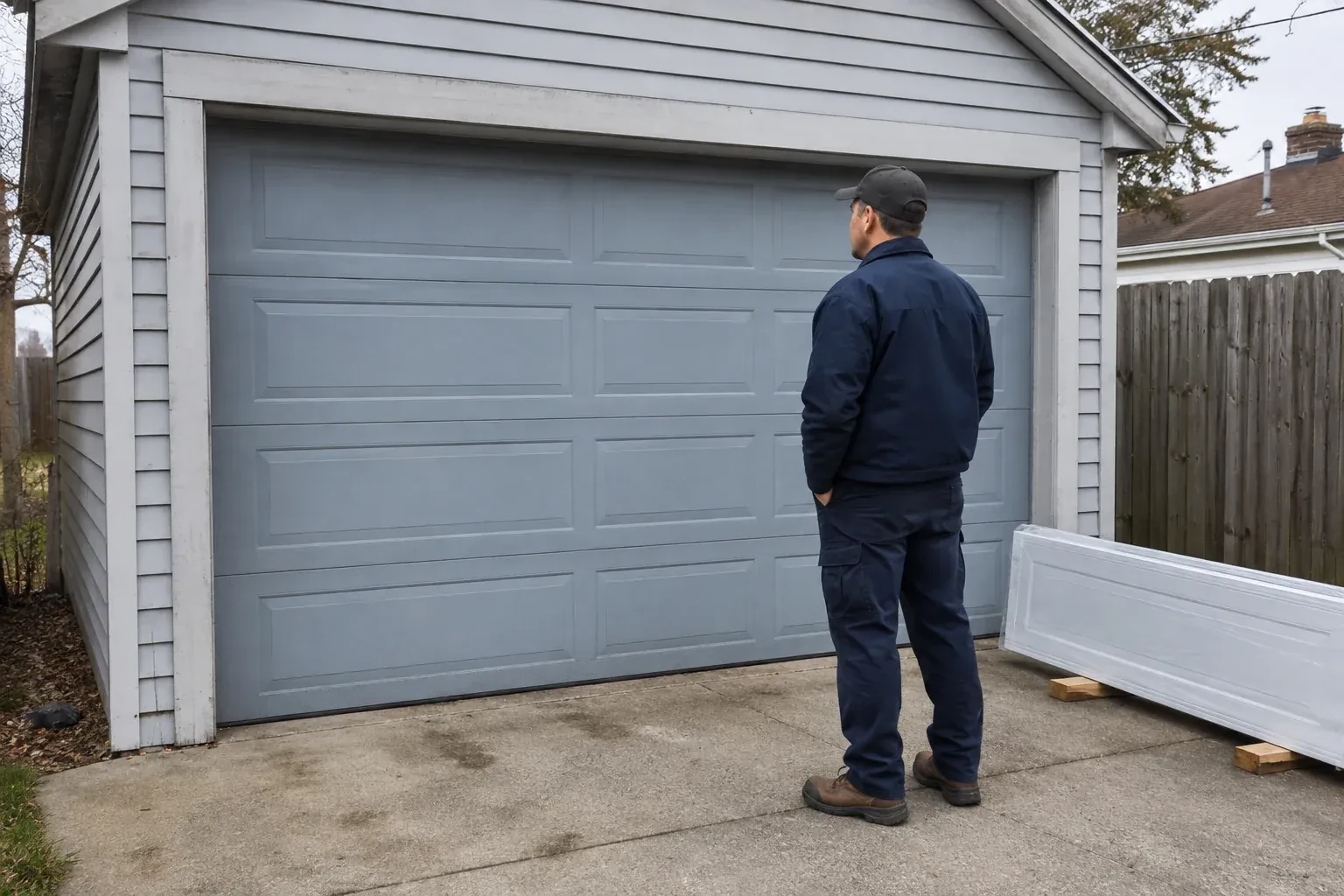
Sound familiar?Columbus
- The call
- The door reaches the floor, then reverses before staying closed. The threshold is clear, but a sensing edge is distorted and one photoelectric sensor has moved out of line with its partner.
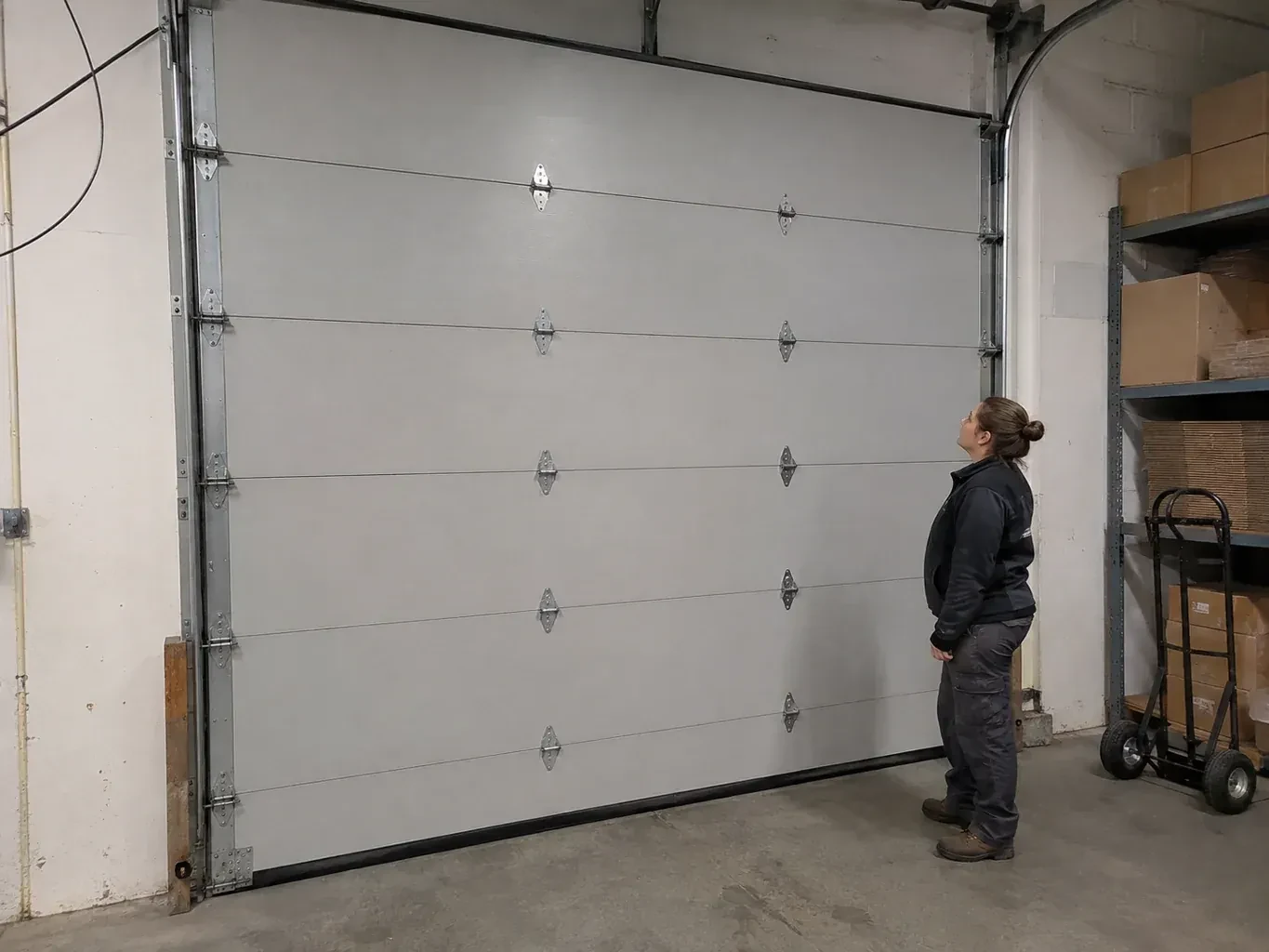
Cold weather has exposed a widening gap below the closed door. The bottom retainer is bent, the rubber seal is split, and uneven seating lets drafts and slush enter the work area.
For a facility with several sectional doors, the repair visit can separate one isolated failure from wear shared across similar openings. Door identification, cycle demand and service history help explain why one bay developed loose hinges, tired rollers or spring imbalance first. The affected opening receives the defined repair, while comparable components on adjacent doors can be visually noted for planning. A clear service record then identifies what changed, which settings were tested and what routine observations facility staff can continue between visits.
Sound familiar?Columbus
Commercial Sectional Door Repair · Columbus
Scene 1
Noise is assessed by location, timing and character. A controlled cycle shows whether a knock occurs at a hinge, a roller entering the curved track, a bearing on the shaft or the operator drive. The technician watches for metal dust, polished rub marks, loose fasteners, roller play and track movement while listening. Door speed and vibration are compared through the vertical and horizontal portions of travel. This approach keeps several sounds from being treated as one problem and identifies the component producing each repeatable rattle, scrape or growl.
Scene 2
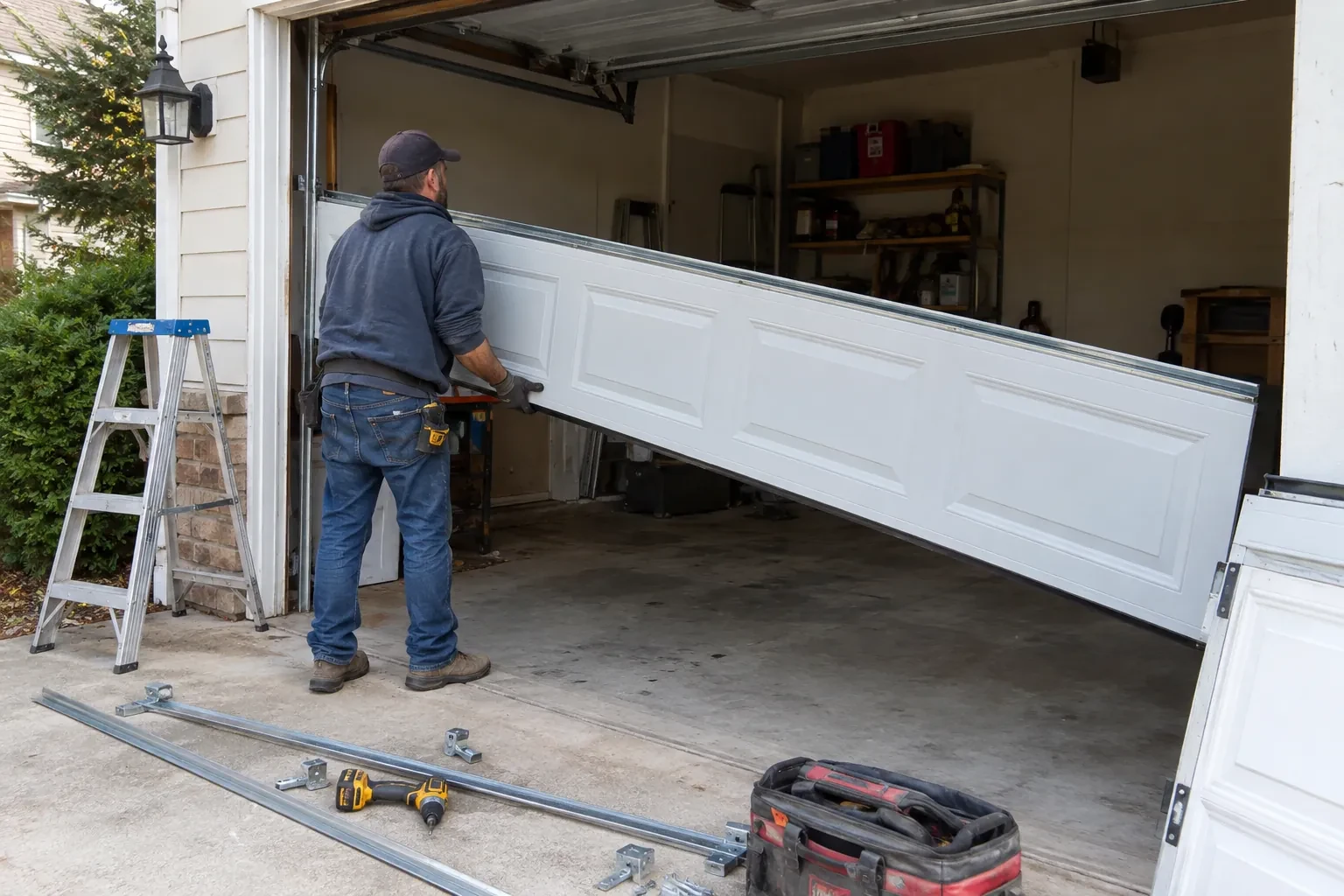
After tools and supports are cleared, the technician observes the repaired assembly through its entire range. Manual balance is evaluated where the design permits, followed by powered cycles that show cable tracking, roller travel, section alignment and final seating. The operator's stop and reverse responses are checked with its installed protective devices. Unusual vibration, contact marks and loose connections receive a final review. The service record identifies parts fitted, adjustments made, test results and any separate maintenance items the facility may wish to schedule.
Scene 3
New rollers, hinges or bearings reduce play at the points that previously knocked or vibrated. Ongoing care means using the lubricant and interval stated for the installed door, applying it to moving pivots and bearings rather than coating the track. Tracks stay clean so rollers can travel on a firm surface without collecting grit. A simple note in the facility log describing the former sound and repaired location gives staff a reference. If a distinct noise returns at the same travel point, that observation makes follow-up assessment more focused.
What shapes the quoteColumbus Garage Door Experts
FeesSame any hour
A clear photo of the interior label, model and serial details, opening width and height, panel thickness and the affected component are useful. For springs or cables, door weight and lift configuration also matter. Photos showing the entire inside of the opening help reveal standard, high-lift or vertical track. Existing service records can confirm earlier component changes.
High-lift doors keep travelling vertically above the opening before turning into horizontal track. That geometry changes cable length, drum type, track support and operator arrangement. Repairs therefore use the recorded lift dimensions and door weight, with cable tension observed through the transition and near the open position. Components from a standard-lift setup are not assumed to match.
The appropriate interval follows the door and operator manuals, operating cycles, environment and facility maintenance plan. A heavily used exterior bay may need attention more often than a lightly used interior opening. Staff can still observe cables, seals, sensors, sound and travel during normal operation, while tensioned components and adjustments remain part of a technician's planned inspection.
DurhamOntario
Commercial Sectional Door Repair · Oshawa
Every square is one home in a hundred.
On-site assessment
Cold weather has exposed a widening gap below the closed door.
(289) 512-0639, open 24/7.
On-site assessment preferred · (289) 512-0639, open 24/7