Sound familiar?Oshawa
- The call
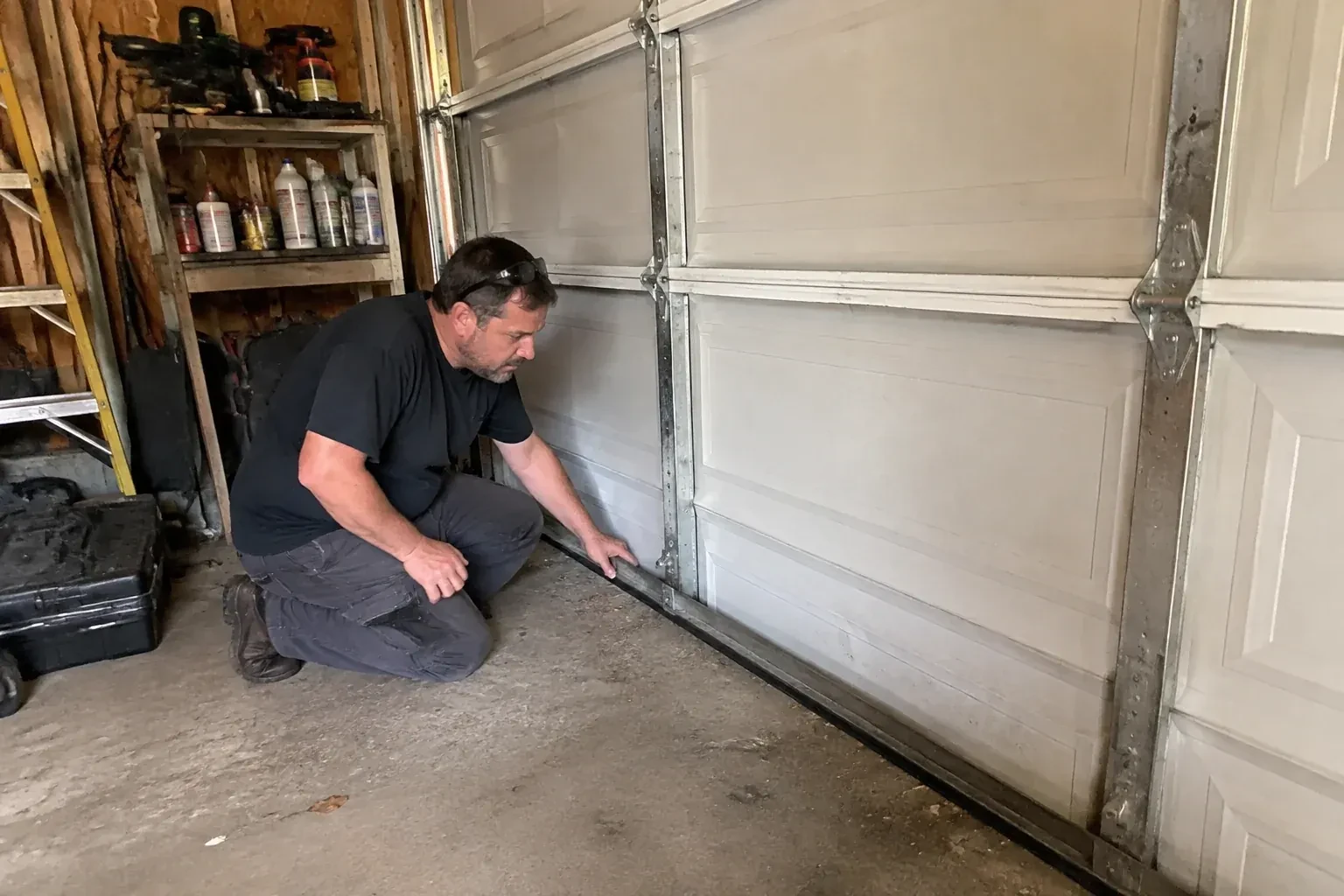
- Backing out this morning, the mirror caught the track beside the door. Now there is a crease in the steel at about knee height, and the door stops with a bang every time a roller reaches it.
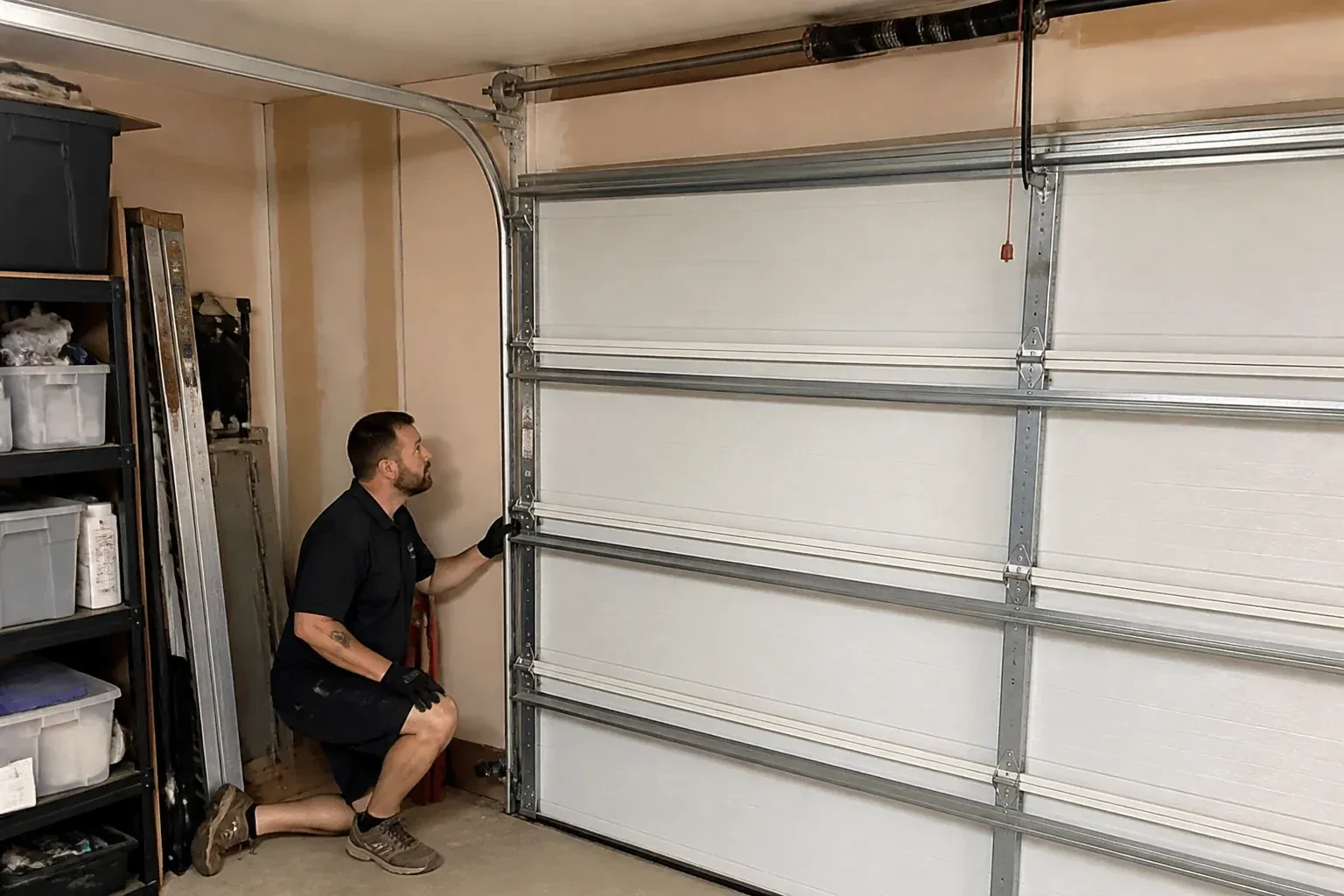
Track has to be in the right place, not merely straight. Each vertical run is set plumb with a slight taper away from the jamb at the top, so the door presses against its stop when closed and swings clear as it opens. The gap between track and door edge is equal on both sides. The horizontal runs are level with each other, square to the vertical runs and matched in radius so the door turns the curve without twisting. Track repair measures all of this and resets whatever has drifted, because a door is only as smooth as the path it is given.
Sound familiar?Oshawa
Garage Door Track Repair or Replacement · Oshawa
Scene 1
A level goes on each vertical track, and a tape measures the gap between the track and the edge of the door at the top and the bottom. The run should be plumb, and the two sides should sit the same distance from the door so both columns of rollers carry evenly. There is also a deliberate detail: the top of the vertical track stands a little further from the jamb than the bottom, so the closed door presses into its stop moulding for a seal and swings clear the moment it starts to rise. A track pushed flat to the jamb makes the door drag; one standing too far out lets it rattle.
Scene 2
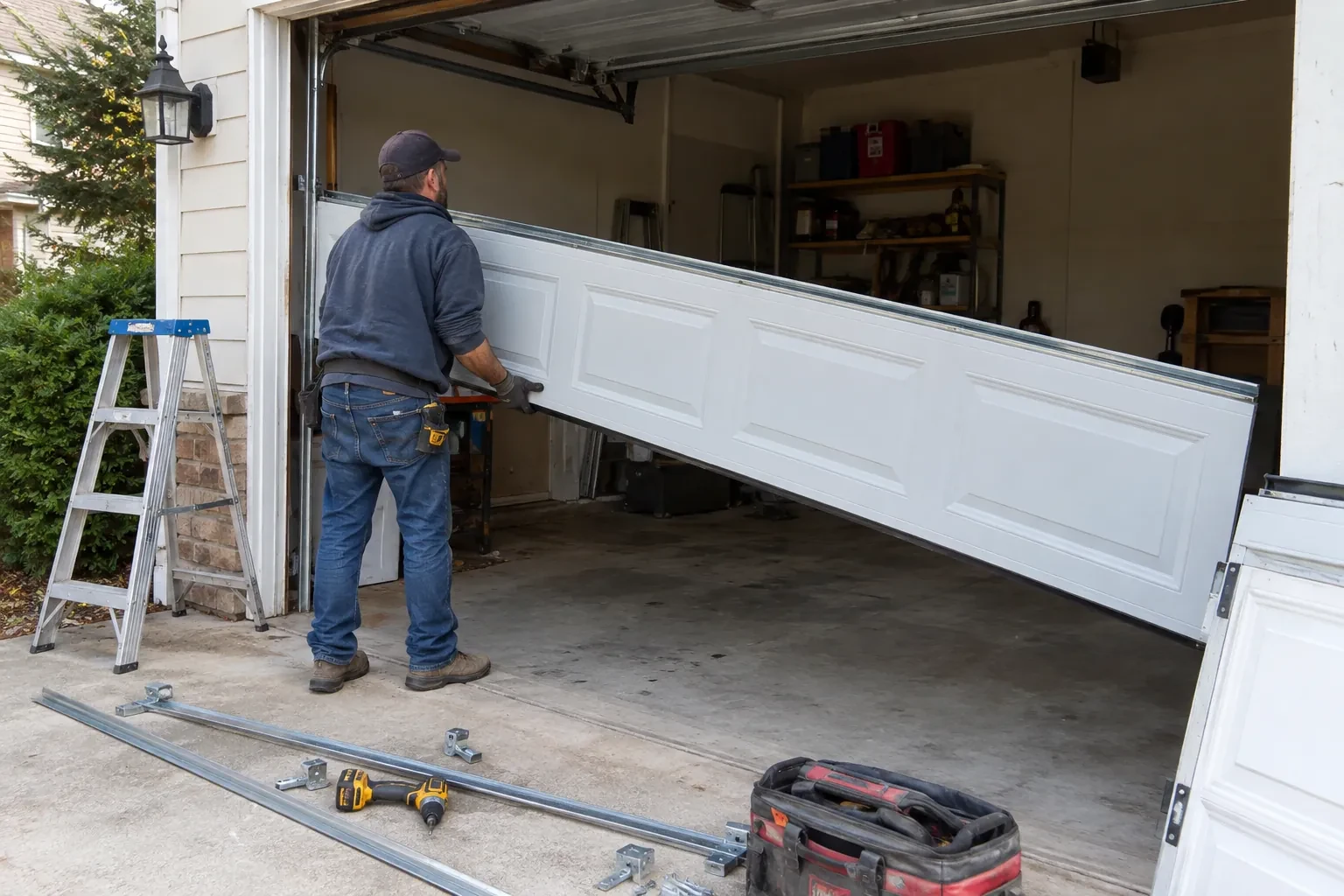
A kinked, cracked or rust-thinned vertical track comes off in one piece. The jamb brackets or continuous angle are unbolted, the old track is lifted clear with the rollers eased out of it, and the new piece, cut or ordered to the same height, profile and mounting style, is bolted to the brackets. The joint with the curve at the flag bracket is aligned so a roller passes with no step, and the track is offered up to the jamb, set plumb with the correct spacing and taper, and lag-screwed into sound wood. The rollers are threaded back in as the door is released from its clamps a little at a time.
Scene 3
If the visit included repairing the jamb, you now have sound timber behind every bracket, and the small habits that keep it that way are simple. Keep the bottom of the jamb dry: slush pushed clear, a bead of exterior caulk where the trim meets the slab, and paint or stain kept up on the exposed face. Look once a year for the tell-tale dark, soft patch at floor level and for screws that seem to have moved. A jamb that stays dry holds lag screws for decades, and with the track now fixed into good wood, the alignment set today has something solid to rest on.
What shapes the quoteColumbus Garage Door Experts
FeesSame any hour
They can, and it is one of the slower ways track goes wrong. A wheel that no longer turns on its bearing skids along one lip of the channel, and over thousands of trips that pressure pries the lip open until a roller can slip out. When a spread section is closed up, the rollers that caused it are replaced at the same time, otherwise the new profile opens again within a season.
The flag bracket is the L-shaped angle at the top of each vertical track. It ties the vertical run, the curve and the horizontal track together, and on a torsion-spring door it also carries the end bearing plate for the spring shaft. Because so much meets there, a loose or bent flag bracket throws the whole path off. The technician unloads the springs before moving it and squares it carefully when it goes back.
Yes, and the wood is part of the job. Screws will not hold in soft timber, so the technician cuts back to solid wood and sisters a new length of jamb alongside or replaces the lower section, fastening it through to the framing. The brackets are then lag-screwed into the fresh wood and the track set to the door. In older garages this repair is common, and it is what makes the alignment last.
DurhamOntario
Garage Door Track Repair or Replacement · Columbus
Every square is one home in a hundred.
On-site assessment
After a decade of slushy winters the bottom foot of the track is flaking rust.
(289) 512-0639, open 24/7.
On-site assessment preferred · (289) 512-0639, open 24/7